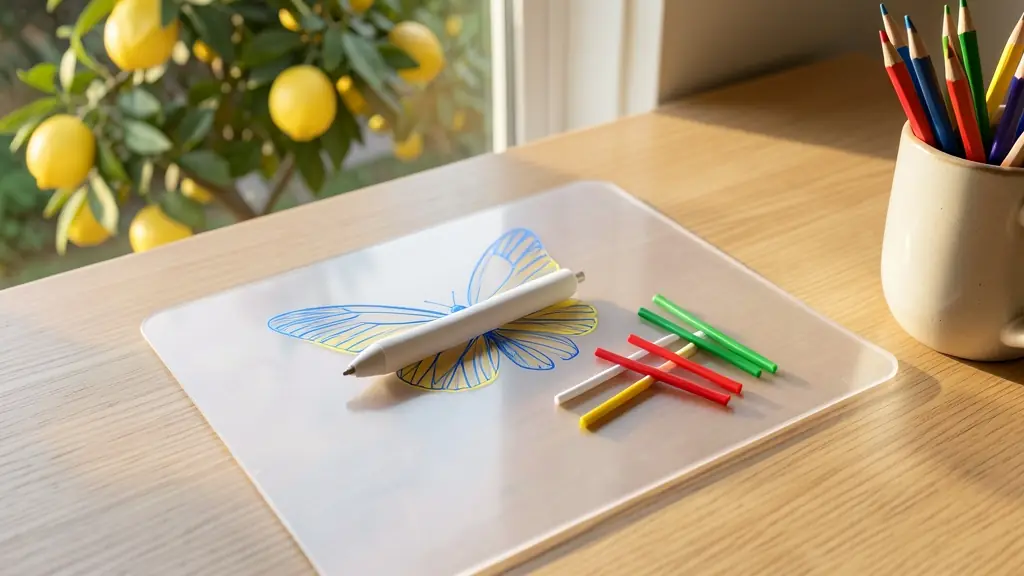
A 3D pen is a hand held hot end: you press a button, molten plastic comes out of the tip, and you draw lines that set hard in the air or on a mat. It is a lovely holiday toy for a ten year old in Kempton Park and a handy tool for a maker who wants to tack two printed halves together. It is not a slow 3D printer. Expect sketches, frames and fixes, not accurate parts.
Hot pens and low temperature pens
Hot pens melt standard 1.75 mm PLA or ABS, the same filament a printer uses, so refills are easy to find and cheap per metre. The tip runs at printing temperatures, around 190 °C and up, which burns skin in an instant. See PLA filament for the plastic itself.
Low temperature pens use their own softer plastic that melts far cooler, so the tip is much less dangerous. The catch: refills usually come only from the pen's maker, cost more per metre and come in fewer colours.
If the user is young, then
- Under about eight: a low temperature pen only, with an adult at the table.
- Older children: a hot pen with a tip guard, a stand to park it in and a clear rule about where the tip points.
- In a classroom: one pen per pair, a heat proof board on each desk and an open window for the smell of ABS.
- Always: switch it off and unplug it when the drawing is done. A pen left hot on a couch is how burns and scorch marks happen.
Using a pen to fix printed parts
A hot pen loaded with the same plastic as a print can weld a crack, fill a gap where two halves meet, or rebuild a snapped tab. Match the material: PLA bonds to PLA, and PETG or ABS will not grip it well. Scrape the joint clean, lay the bead slowly and let it fuse into both sides.
It is a rough repair, fine for a cosplay prop or a desk tidy, not for a part that carries weight. For a replacement that fits, have it printed.
A first afternoon with a new pen
- Let it heat fully before feeding plastic, or it jams.
- Trace a flat shape on a template under a silicone mat.
- Peel the flat pieces off and join them into a box or a frame.
- Practise lines straight up in the air at a slow, even speed.
- Reverse the feed to unload before switching off.
What to put in your request
- How many pens, and for what ages
- Hot pens for standard filament or low heat pens
- Colours and how many refills to include
- Template mats, stands or a carry case
- Your town or school for delivery
3D Pens for makers, schools, engineers and businesses
- Makers and hobbyists: drawing small ornaments and tacking printed cosplay pieces together at the joints
- Schools, colleges and makerspaces: a holiday club or art class drawing frames and shapes that stand off the page
- Engineers and product designers: a quick plastic tack on a prototype seam before the next print comes off the bed
- Small businesses and sellers: a craft market stall making name tags and small drawn figures on the spot
- Factories, mines and workshops: filling a small gap or labelling a plastic jig, never repairing a load path
- Dental labs and clinics: occupational therapy sessions working on grip and fine motor control, supervised
- Car owners and panel shops: patching a cracked plastic trim behind a panel where nobody sees it
- Architects, artists and prop makers: freehand wire like sketches and fine accents added to a printed sculpture