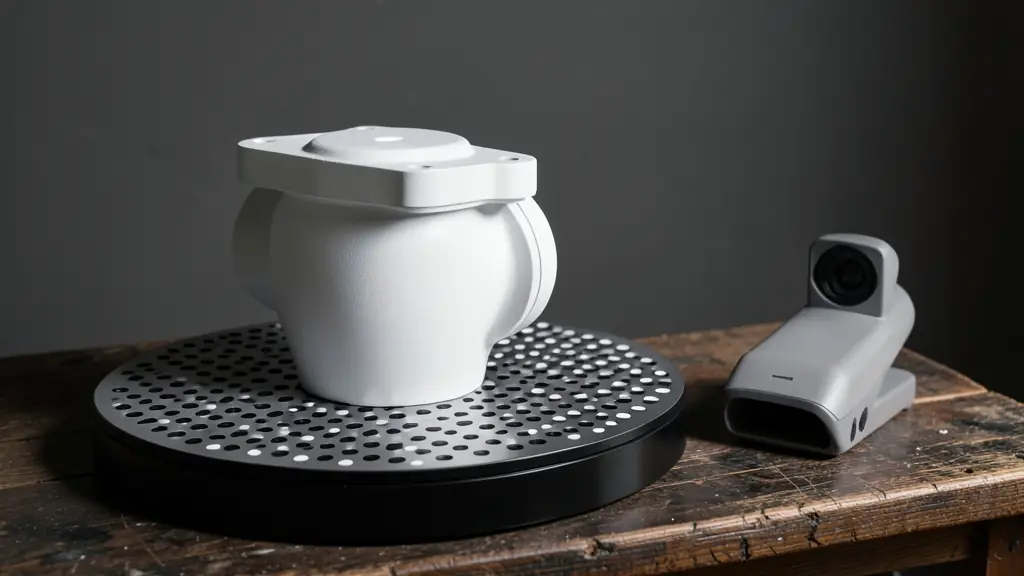
Most people who phone for a scan want one thing: a printable copy of an object they cannot measure with a calliper. The trap is that "a scan" can mean three very different files. A raw mesh straight off the scanner, a cleaned and closed STL, and a proper CAD model drawn over the scan can differ in price several times over. Decide which you need first, and the scanning service can quote fairly and you can compare like with like.
Three deliverables, three prices
- Raw mesh: the point data stitched into triangles. Holes where the light could not reach, noise on edges. Cheapest, and fine for reference or a rough visual.
- Cleaned STL: holes filled, noise removed, made watertight so a slicer accepts it. Good for a figure, a statue copy or a body panel shape.
- CAD model over the scan: a designer draws true flats, holes and bores using the scan as a guide, giving a STEP file you can edit. This is reverse engineering, and it costs the most. See 3D modelling and design.
Jobs scanning services see every week
- A worn gearbox cover from a 1970s tractor in the Free State, to be redrawn before the last one cracks.
- A bakkie's wheel arch or dashboard section, so a printed vent pod fits the curve. See 3D printed car parts.
- A person scanned standing still for a painted figurine or a wedding topper.
- A factory checking a batch of castings against the original CAD, with a colour map of the deviations.
- A museum or church recording a carved piece before restoration.
Accuracy, spray and markers
Handheld structured light scanners suit people and car panels; desktop and metrology scanners resolve much finer detail on small parts. Ask what accuracy the scanner achieves on an object of your size and treat any single number as a guide, because the operator, the surface and the cleaning step all count.
Shiny chrome, black rubber and clear plastic confuse scanners. The operator may dust the part with a scanning spray that wipes or evaporates off and stick small markers on it. Tell them if the surface must not be touched. Thinking of buying instead? Compare 3D scanners.
On site or brought in
A loose part travels to the scanning service and usually costs less. A car, a machine bolted to the floor in a Rustenburg plant, or a sculpture in a garden in Constantia needs the operator to come out, and the quote then carries travel and time on site. Give the address and access hours in your request.
What to put in your request
- What the object is and its rough size
- Mesh, cleaned STL or CAD model wanted
- Whether the part can travel or needs on site work
- Shiny, dark or delicate surfaces to warn about
- What the file will be used for afterwards
3D Scanning Services for makers, schools, engineers and businesses
- Makers and hobbyists: a cosplay helmet fitted to your head or a family heirloom copied for a cousin
- Schools, colleges and makerspaces: a fossil, skull or artefact scanned so learners can print and handle copies
- Engineers and product designers: an organic shape captured so a designer can build a fitting part around it
- Small businesses and sellers: a product sample digitised for a catalogue, a mould or a print run
- Factories, mines and workshops: obsolete castings reverse engineered, or new castings inspected against the CAD
- Dental labs and clinics: body shape scans for an orthotic workshop's own process, never as a medical approval
- Car owners and panel shops: panels, dashboards and engine bays scanned so printed parts follow the curves
- Architects, artists and prop makers: sculptures, heritage carvings and site features recorded for models and restoration