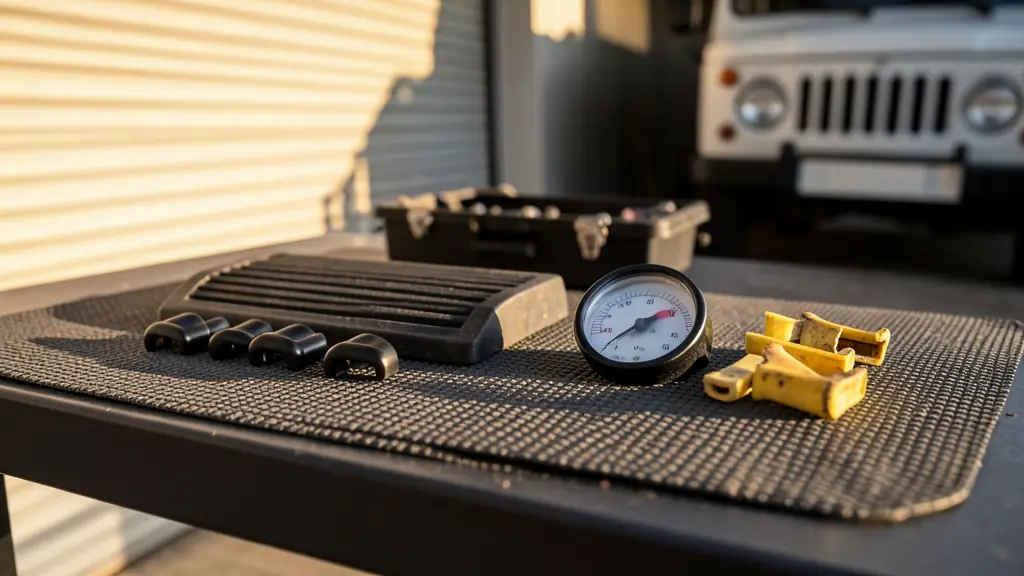
The agent says the part is discontinued. The scrapyard has three of the same car, all with the same clip snapped. That is where printing pays for itself: small plastic parts for older models, low runs for restorers, and ducts and mounts for track cars. It suits parts that hold trim in place, guide air or hold a gauge. It does not suit anything that keeps the car on the road or you in your seat, and the material matters more than the printer.
Good candidates
- Door card and boot lining clips, and the push rivets that hold wheel arch liners.
- Vent louvres, knobs, switch blanks and cup holder inserts.
- Gauge pods, phone and radio mounts, and dashboard bezels for a restored bakkie.
- Brake cooling ducts and intake trumpets for a track day car, in heat resistant material.
- Badges and script for old models, painted or chromed afterwards.
- Battery tie downs, wiring guides and sensor brackets that carry very little.
Never print these
Brake components, steering parts, suspension links, seat belt hardware, seat mounts, wheel spacers, airbag covers and anything structural. A printed part can look perfect and still fail suddenly along a layer line. No bureau should accept that job, and if one does, walk away.
Fuel system parts are also out: many plastics swell or crack in petrol. When in doubt, ask an engineer to sign it off, and your insurer may have a view on modified cars too.
Heat decides the material
A car parked in Upington or Polokwane in January bakes far past the 55 to 60 °C where PLA softens, so a PLA vent will droop within a week. ASA handles sun and heat on the dash and outside; see ABS and ASA filament. Near the engine, nylon with carbon fibre or PC goes further; see nylon and carbon fibre. Clips that flex do well in PETG or nylon, and bump stops and grommets in TPU.
A fitting routine
- Clean the old part, measure it with a calliper and photograph where it sits.
- Get a model drawn or scanned; see 3D modelling and design.
- Print one cheap test in PLA to check the fit.
- Adjust, then print the final part in the right material.
- Fit it, drive a week in the heat, then order the rest of the batch.
What to put in your request
- The car's make, model and year in plain words
- Photos of the original part and where it fits
- Calliper sizes, or the broken part itself
- Inside the cabin, outside or near the engine
- How many you need, test print first
3D Printed Car Parts for makers, schools, engineers and businesses
- Makers and hobbyists: phone mounts, cup holder inserts and switch blanks for your own daily driver
- Schools, colleges and makerspaces: motor mechanics learners printing trim clips and ducts to study fit and heat
- Engineers and product designers: intake, sensor and wiring brackets tested in the car before any metal version
- Small businesses and sellers: a panel shop's run of discontinued clips instead of waiting on an agent
- Factories, mines and workshops: cab trim, knobs and covers for mine vehicles and forklifts with no local spares
- Dental labs and clinics: hand control aids and grips for adapted vehicles, fitted by the converter
- Car owners and panel shops: restorers and club racers replacing trims, badges, pods and ducts for old models
- Architects, artists and prop makers: film and advert car props, fake badges and dressed up interior pieces