Leave a PLA cover on a pool pump in Upington for one summer and you learn why ABS and ASA exist. Both take heat that softens PLA, both sand, drill and glue well, and both are tough. They part ways in the sun: ABS goes chalky and yellow under UV over time, while ASA was made for outdoor life. The price is paid at the printer. These plastics shrink as they cool, so they lift and crack in a draught, and they give off fumes you do not want in a bedroom.
Pick by where the part will live
- Hot but out of the sun (inside a cubby, near a motor, in an electronics box that runs warm): ABS does the job and costs a little less.
- Outside in daylight (a gutter bracket, a sign letter on a farm gate, a weatherproof lid for a sprinkler controller): ASA, since it holds its colour and strength under UV.
- Behind a windscreen: ASA again. See car parts for what never to print.
- You want a glossy smoothed finish: ABS is the one most people vapour smooth.
Why corners lift and layers split
ABS and ASA shrink more than PLA as they cool. The bottom layers cool while the top is still hot, the part pulls inward, and the corners peel off the bed or a crack opens across the layers halfway up. Tall thin parts are the worst.
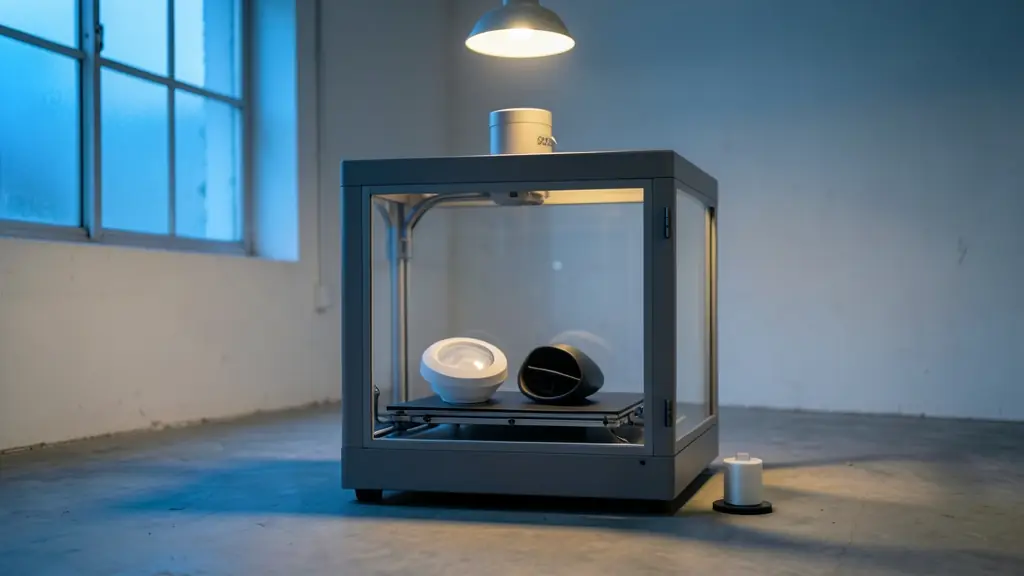
- Close the printer in. An enclosure keeps the air around the part warm and still.
- Run the bed hot, typically 90 to 110 °C, with a brim on sharp corners.
- Turn the part cooling fan low or off, except on bridges.
- Keep windows shut and ceiling fans off in the room.
- Leave the door closed until the part has cooled.
Fumes and the room you print in
Printing ABS and ASA releases styrene and fine particles, more than PLA does. Ventilate the room, or better, enclose the printer and pull its air through a filter and out of a window with a small extractor. Do not run it in a child's room or in the kitchen.
A cold room makes everything harder. A garage at 8 °C on a Highveld winter morning will crack ABS parts that print fine in December, so an enclosure helps twice. Settings per material are in the print settings guide.
Acetone smoothing, done carefully
- Print the ABS part with an extra wall or two, since smoothing eats a little surface.
- Work outdoors or in a well ventilated room, far from any flame, heater or spark: acetone is very flammable.
- Line a glass jar with acetone dampened paper towel, keeping the part from touching it.
- Close the lid and check every few minutes; the shine appears fast.
- Take the part out and let it harden for a day before you handle it.
ASA reacts less evenly, so many people sand and paint it instead.
What to put in your request
- Whether the part lives outdoors in the sun or indoors hot
- How many kilograms and which colours
- The filament diameter your printer takes
- Whether your printer has an enclosure
- Your town and the date you need the spools
ABS and ASA Filament for makers, schools, engineers and businesses
- Makers and hobbyists: pool pump covers, outdoor light fittings and garden parts that sit in the sun
- Schools, colleges and makerspaces: enclosed printer projects that teach shrinkage, ventilation and material choice
- Engineers and product designers: housings and test parts that must survive heat before a moulded version
- Small businesses and sellers: outdoor signage letters and weatherproof boxes for installations on site
- Factories, mines and workshops: cable boxes, guards and fittings for hot plant rooms and outdoor equipment
- Dental labs and clinics: storage and organiser parts for a workshop, never anything used on a patient
- Car owners and panel shops: vent louvres, trim clips and gauge pods for cabins that bake in summer
- Architects, artists and prop makers: smoothed display pieces and outdoor installations that must keep their colour