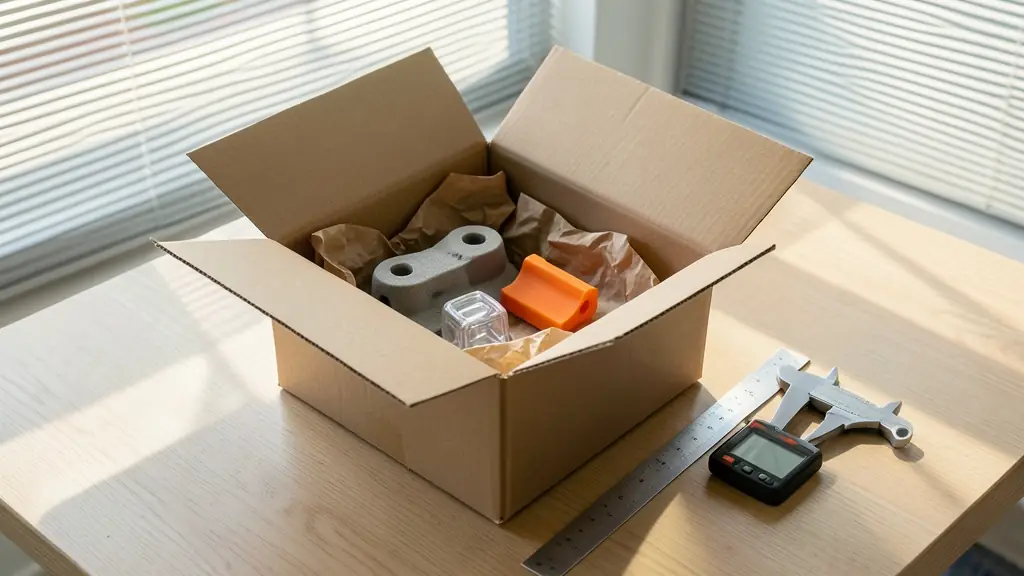
Plenty of people need one printed part and no printer. An engineer in Pinetown wants ten PETG housings by Friday, a panel shop needs a clip that no agent stocks, a student has a model due and no machine at home. A print bureau or print farm takes your file, asks a few questions, prints and couriers it. The better your file and your answers, the faster the quote and the fewer surprises in the box.
Files a bureau can work from
STL is the common one: a mesh of triangles, fine for printing as it is. 3MF carries the mesh plus colours and sometimes settings. STEP is a CAD solid, best if the bureau may need to adjust a hole or a wall. G-code is sliced for one printer and is no use to anyone else.
Only a sketch, a broken part or a photo? Start with 3D modelling and design, or have the object measured by 3D scanning services first.
FDM, resin or powder: which process to ask for
- FDM in PLA, PETG, ASA or nylon: the cheapest per part, visible layer lines, good for brackets, jigs, enclosures and large pieces.
- Resin (MSLA or SLA): fine detail and smooth faces for miniatures, jewellery patterns and small display models; more brittle unless a tough resin is used.
- SLS or MJF nylon: powder fused into strong grey or black parts with no supports, suited to working parts and batches; see prototyping and production.
- Metal powder bed parts: a separate bureau; see metal 3D printing.
What the bureau will ask you
Expect five questions every time: which material, what colour, how many, what finish (as printed, sanded, primed or painted) and by when. Answer one more without being asked: what the part does. A clip that flexes, a cover that sits on a hot motor and a shelf display need different plastics, and saying so lets the bureau pick the right one.
For anything holding weight, an engineer signs it off; the bureau prints to your file and spec. The 3D printing prices page explains how they cost it.
Checking the part when it lands
- Unpack it before the courier leaves if you can, and photograph any breakage.
- Measure the critical sizes with calipers against your drawing.
- Try the fit: holes, clips and mating parts.
- Look for layer gaps, warped corners and support marks on faces that show.
- Report a problem the same week, with photos.
What to put in your request
- The STL, 3MF or STEP file, or a link to it
- How many and in which material and colour
- What the part does and where it lives
- The finish: as printed, sanded or painted
- The date you need it and your town
3D Printing Services for makers, schools, engineers and businesses
- Makers and hobbyists: a replacement knob, a miniature batch or a cosplay piece without buying a printer
- Schools, colleges and makerspaces: learners' design projects printed in time for the technology assessment
- Engineers and product designers: fit check housings and test parts in PETG or nylon before tooling is made
- Small businesses and sellers: product samples, shop displays and short runs printed for a launch
- Factories, mines and workshops: a nylon gear or guide printed while the imported spare is still on the water
- Dental labs and clinics: dental and orthotic models printed to a file the lab or clinic approves
- Car owners and panel shops: clips, vent parts and brackets printed for older models where spares are gone
- Architects, artists and prop makers: architectural site models, sculptures and casting patterns for jewellers