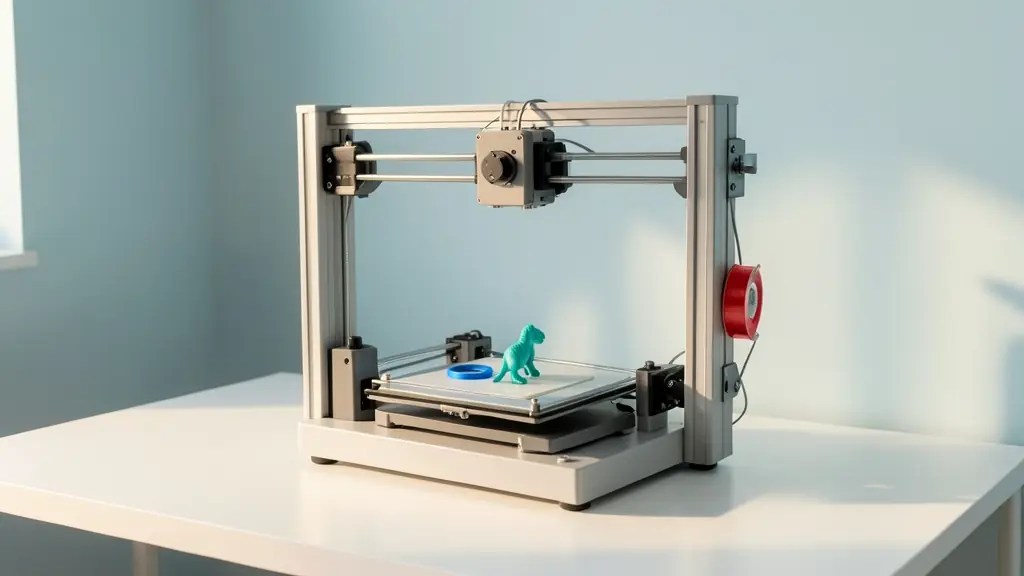
That advert for a printer under R2,000 is not a scam, but it is quiet about a few things. The cheapest machines print well once they are set up, and setting them up is where the cost moves from your wallet to your weekends. A teenager in Benoni saving for a first printer, or a parent buying one for Christmas, should know what is missing, what has to be bought straight after, and how to check a second hand bargain before handing over cash.
What the lowest priced machines skip
- Levelling by hand. Four knobs under the bed and a sheet of paper; easy once learned, frustrating on day one.
- A bowden extruder. The motor pushes filament through a long tube, which struggles with soft TPU.
- Loud fans and a bare frame. Fine in a garage, tiring in a bedroom.
- No local spares. Some models are only sold as imports, so a broken part means weeks of waiting.
None of this stops good prints. It just means more time spent tuning. Compare against the options on 3D printers for sale.
The bill after the box is opened
Budget for filament first: a couple of 1 kg spools of PLA so you are not stopped halfway through a project. Add a pack of spare nozzles, a basic tool kit with a scraper and side cutters, glue stick, and a dry box if you live near the coast where spools pick up damp.
Then the running cost per print: plastic, power and the odd failure. The print cost calculator gives a realistic number, and 3D printer filament covers which spools to start with.
Testing a second hand printer before you pay
- Ask the seller to heat the nozzle and bed in front of you and watch that both reach their set temperature.
- Print a small test cube or calibration piece from start to finish.
- Move each axis by hand with the power off; it should glide, not grind or catch.
- Look at the belts for frayed edges and the bed sheet for deep gouges.
- Ask what has been replaced and why, and whether the original box and tools come with it.
When spending more costs less
Two cheap printers bought a year apart, plus the spares, wasted spools and lost evenings, can add up to more than one good mid range machine with auto levelling and a direct drive. The better machine also holds its resale value.
If your budget allows a step up, look at 3D printer prices to see what each extra rand buys.
What to put in your request
- Your top budget, including VAT and delivery
- Who will use it and what they want to print
- Whether used or ex demo machines are fine
- Extras wanted: spools, nozzles, a tool kit
- Your town for delivery or collection
Budget 3D Printers for makers, schools, engineers and businesses
- Makers and hobbyists: a starter machine for keyrings, figurines and small household repairs on a weekend
- Schools, colleges and makerspaces: low cost printers so more learners get a turn, set up by a teacher who tinkers
- Engineers and product designers: a cheap second machine for rough fit checks while the good printer runs longer jobs
- Small businesses and sellers: an entry printer to test whether custom keyrings or name signs will sell before scaling
- Factories, mines and workshops: a low risk trial printer in the workshop for simple jigs and cable clips
- Dental labs and clinics: a training machine for a clinic workshop learning the process, not for patient models
- Car owners and panel shops: printing trial clips and knob covers to test fit before ordering a tougher material
- Architects, artists and prop makers: a sketch printer for quick massing models and rough prop shapes