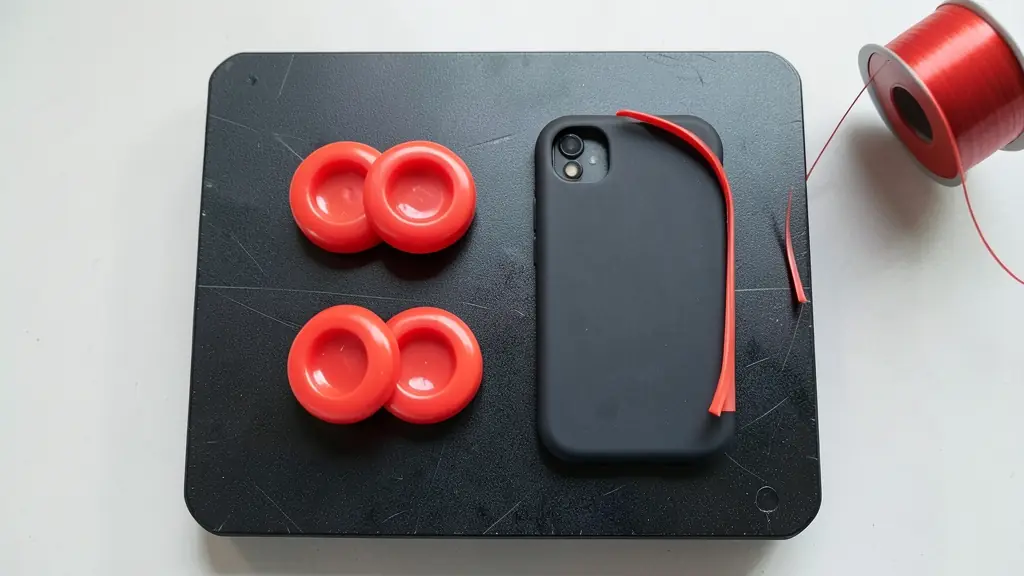
A washing machine that walks across the floor on the spin cycle, a borehole pump lid that lets dust in, a racing drone that has hit one fence too many: these are TPU jobs. TPU is a flexible filament that bends, squashes and springs back to shape. It prints well once you accept its terms: slow, dry and pushed by an extruder that grips it close to the nozzle. Rush it through a long tube and it buckles inside the extruder.
Shore hardness, the number on the label
TPU is sold by shore hardness. 95A is the common grade: firm like a shoe sole, flexible in thin walls, and the easiest to print. 90A and 85A feel softer and grip better, but they are harder to push, because the filament itself is floppy. Grades on the D scale are stiffer again.
Start with 95A. Move softer only when 95A prints cleanly and the part genuinely needs more give. Many printers that cope with 95A jam on 85A.
Direct drive against a bowden tube
On a bowden printer the motor sits on the frame and pushes filament down a long PTFE tube to the hot end. With soft TPU that is like pushing a cooked noodle: it compresses, lags behind the motor and coils up in any gap. A direct drive extruder sits right on the print head, so the filament has a few centimetres to travel. That is why the cheapest budget printers struggle with flexibles.
On a bowden machine you can still print 95A: very slow, short retraction or none, and a filament path with no gaps. If flexible parts are a big part of your plans, choose a direct drive head when you shop for a printer.
If this happens, try that
- Filament wraps around the extruder gear: lower the speed, loosen the tension slightly, close any gap in the path.
- Fine cobwebs all over the part: the spool is wet; dry it first.
- The part comes out too stiff: use fewer walls and a lower, springy infill such as gyroid.
- It will not let go of smooth PEI: wipe on glue stick as a release.
- Thin, gappy walls at speed: you are past what the hot end can melt; check the nozzle flow calculator.
Keeping TPU dry
TPU soaks up moisture from the air faster than most filaments, and a spool can turn bad over a humid Durban weekend. Wet TPU hisses at the nozzle, strings in long threads and leaves a fuzzy, bubbly skin.
Dry it in a dryer box at the temperature on the label for a few hours, then print straight out of a sealed dry box with a feed hole. The filament dryers page covers the options.
What to put in your request
- The shore hardness you want, 95A if unsure
- Whether your printer is direct drive or bowden
- The spool size, small to try or a full kilogram
- The colours and filament diameter
- What you plan to print, such as gaskets or cases
TPU Filament for makers, schools, engineers and businesses
- Makers and hobbyists: rubber feet, drone bumpers, phone cases and grips for tools around the house
- Schools, colleges and makerspaces: flexible hinges and wheel tyres for robotics and design technology projects
- Engineers and product designers: seals, bump stops and soft jaws for testing fits on a prototype
- Small businesses and sellers: custom phone cases, keyring tags and soft display pads for products
- Factories, mines and workshops: vibration pads, cable grommets and soft covers for machine controls
- Dental labs and clinics: soft grips and organiser parts, never a medical device or anything implanted
- Car owners and panel shops: anti rattle pads, cup holder liners and dust boots for non critical parts
- Architects, artists and prop makers: flexible cosplay straps, joints and textured props that bend without breaking